 Don't forget that NUTRITION is a
complex process that consists of four processes that take place at the same
time and involve different sets of specialised organs or systems:
- Digestion
- Breathing
- Circulation
- Excretion
In this post, we are
learning more about CIRCULATION
This process allows us to transport nutrients and oxygen to our body cells and waste substances and carbon dioxide from our cells that our bodies must eliminate.
 In the circulatory system we find the HEART, which is the main organ of this system, and the BLOOD VESSELS, which are tubes that connect your heart to the rest of your body.
Your heart is a muscle that pumps BLOOD around your body carrying nutrients and oxygen and collecting waste substances and carbon dioxide that our cells must eliminate. It has four chambers: the upper chambers are the atria and the lower chambers are the ventricles.
Here you have a diagram that also shows the main arteries and veins attached to your heart:

 There are three types of BLOOD VESSELS:
- Arteries: wide tubes that carry blood from the heart.
- Veins: narrow tubes that carry blood to the heart
- Capillaries: very narrow tubes that connect arteries to veins and reach every part in our body.
Here you have two diagrams with the main blood vessels in your body (You don't have to learn all these names! It's for your information only):

 The BLOOD is made up of a liquid called plasma and three types of cells with different functions:
1. Red blood cells: absorb oxygen in the lungs and transport it to all the cells in our body.
2. White blood cells: fight germs and infections.
3. Platelets: stop bleeding and form scabs.

HOW DOES BLOOD CIRCULATE?
In fact, the circulation of blood takes place in two steps:
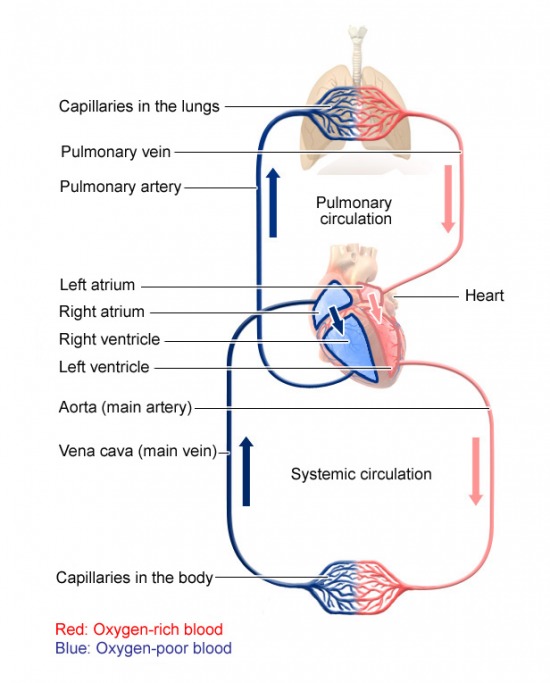
1. Pulmonary circulation is the movement of blood from the heart to the lungs. In the lungs the blood releases carbon dioxide and picks up oxygen in the alveoli; then the blood flows back to the heart. This oxygenated blood has a bright red colour.
2. Systemic or general circulation is the movement of oxygenated blood from the heart to the rest of the body. The oxygen goes into the cells of our body and the blood picks up carbon dioxide. Then the blood flows back to the heart. This deoxygenated blood has a dark red colour.
 In the circulatory system we find the HEART, which is the main organ of this system, and the BLOOD VESSELS, which are tubes that connect your heart to the rest of your body.
Your heart is a muscle that pumps BLOOD around your body carrying nutrients and oxygen and collecting waste substances and carbon dioxide that our cells must eliminate. It has four chambers: the upper chambers are the atria and the lower chambers are the ventricles.
Here you have a diagram that also shows the main arteries and veins attached to your heart:
Look at this video to learn more about your heart
and how it works:
There are three types of BLOOD VESSELS:- Arteries: wide tubes that carry blood from the heart.
- Veins: narrow tubes that carry blood to the heart
- Capillaries: very narrow tubes that connect arteries to veins and reach every part in our body.
Here you have two diagrams with the main blood vessels in your body (You don't have to learn all these names! It's for your information only):
1. Red blood cells: absorb oxygen in the lungs and transport it to all the cells in our body.
2. White blood cells: fight germs and infections.
3. Platelets: stop bleeding and form scabs.
HOW DOES BLOOD CIRCULATE?
In fact, the circulation of blood takes place in two steps:
1. Pulmonary circulation is the movement of blood from the heart to the lungs. In the lungs the blood releases carbon dioxide and picks up oxygen in the alveoli; then the blood flows back to the heart. This oxygenated blood has a bright red colour.
2. Systemic or general circulation is the movement of oxygenated blood from the heart to the rest of the body. The oxygen goes into the cells of our body and the blood picks up carbon dioxide. Then the blood flows back to the heart. This deoxygenated blood has a dark red colour.
Here you have two videos to learn more about the circulatory system:


