Gustav Klimt, (born July 14, 1862, Vienna, Austria—died February 6, 1918, Vienna), was an Austrian symbolist painter, founder of the school of painting known as the Vienna Sezession. He was one of the pioneers of Austrian Modernism and remained in steady work all his life. In his paintings, he created visual textures by the repetition of small brushtrokes, dot or other shapes. His father was a poor immigrant gold engraver.
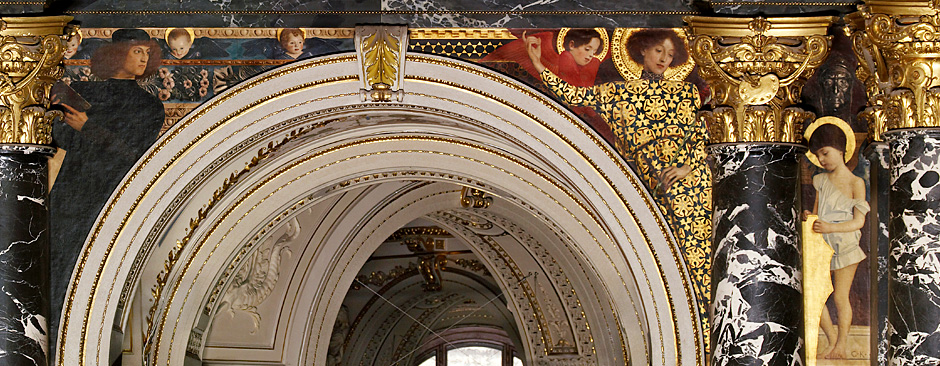
After studying at the Vienna School of Decorative Arts, Klimt in 1883 opened an independent studio specializing in the execution of mural paintings. His early work had a classical style that was typical of late 19th-century academic painting, as can be seen in his murals for the Kunsthistorisches Museum (Museum of Art History) in Vienna.
In 1897 Klimt’s mature style emerged, and he founded the Vienna Sezession, a group of painters who revolted against academic art in favour of a highly decorative style similar to Art Nouveau. During these years, Klimt painted many images of women. He also painted landscapes. like the one shown below, .
Country Houses on Attersee Lake
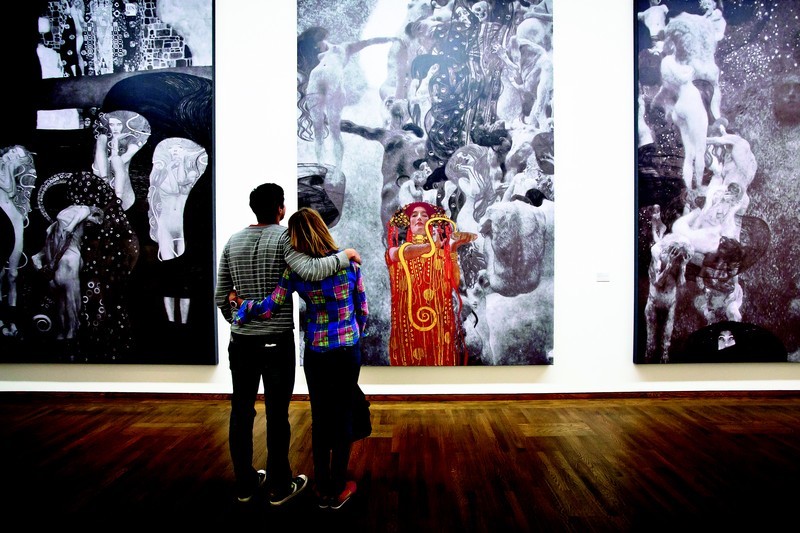
Beginning in 1894, Klimt’s work grew increasingly controversial. He took a few commissions for public works and did not produce what the patron or public felt was appropriate to be displayed. For example, three of these works showed Philosophy, Medicine, and Jurisprudence as nude women. After this, Klimt stopped taking public commissions.
Philosophy, Medicine, and Jurisprudence
In 1908 Klimt left the Vienna Secession movement and his art moved into a new phase. It was marked by widespread use of gold leaf. These are the paintings most people are familiar with, including The Kiss and Adele Bloch-Bauer I . In these works he treats the human figure without shadow and heightens the sensuality of skin by surrounding it with areas of flat, highly ornamental, brilliantly composed areas of decoration, in which he applied tiny bits of gold leaf.
The Kiss
Adele Bloch-Bauer I
Adele Bloch-Bauer I sold in 2006 at auction for more money than any other painting ever had before: $135 million. Here you have other paintings by Gustav Klimt:
PortraitMäda Primavesi
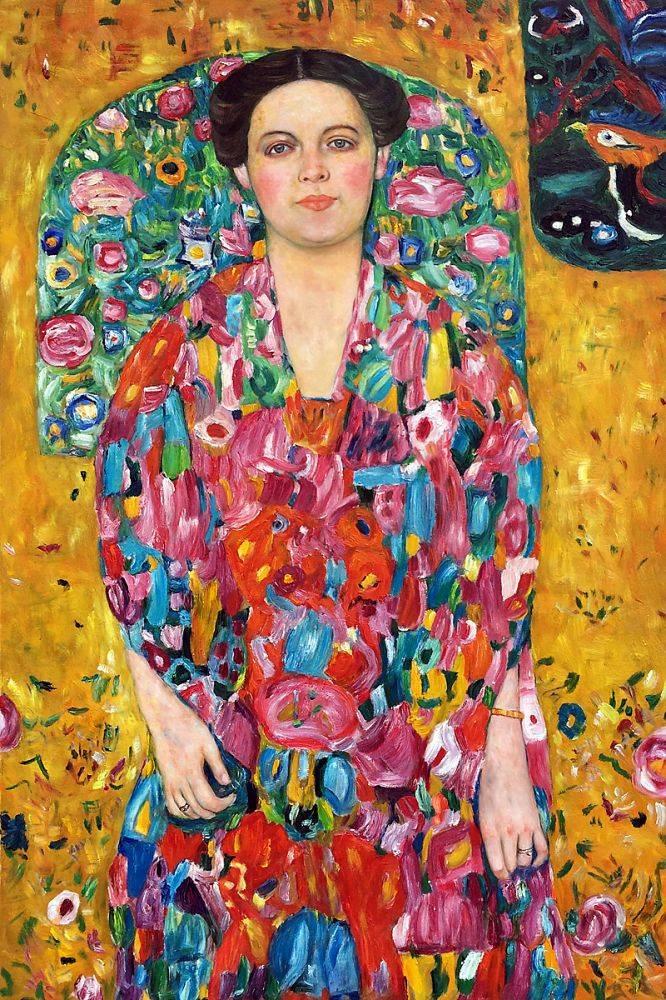
Portrait of Eugenia Primavesi
The Tree of Life
Watch these videos to learn more about this artist:
ANDY WARHOL (1928-1987) es uno de los personajes más
influyentes en la pintura de la segunda mitad del siglo XX. Es considerado el fundador y la figura más
relevante del llamado Pop Art. Después de graduarse en el Carnegie Institute of
Technology en 1949, se mudó a Nueva York y rapidamente comenzó a ganar fama como artista
comercial. Hizo anuncios
publicitarios e ilustraciones y para 1955 ya era el pintor comercial más famoso de Nueva York. En 1960 realizó su primera pintura basada en personajes de Comic. Comenzó, también, a ser el pionero en el proceso del desarrollo de
fotografías de gran formato, utilizándolas después como base de sus pinturas. Fue esta técnica la que le permitió producir una serie de imágenes
repetitivas, con pequeñas variaciones, que comenzó en 1962 con el famoso bote de sopas
Campbell.
A finales de los 60's comenzó a hacer cine. En 1967 produjo el disco de The Velvet Underground & Nico.
El 3 de junio de 1968, Valerie Solanis, una estrella
de segunda, fue a su estudio, llamado Factory, y disparó a Warhol tres veces en el pecho. Sobrevivió
de milagro. Después de una larga recuperación el pintor siguió trabajando. Fundó la
revista Interview y publicó el libro The Philosophy of Andy Warhol (From A to B and Back Again).
Warhol falleció en 1987, momento hasta el que estuvo
dedicado a la pintura. Se le podría calificar como el mejor artísta gráfico del Pop
Art y uno de los artistas más influyentes del siglo XX por su revolucionaria obra.
Aquí tienes algunas conocidas obras de este artista:
Como parte de nuestro proyecto de plástica, aquí os dejamos este pequeño reportaje sobre la vida de Andy Warhol:
Un vídeo con datos curiosos sobre este icono del Pop Art:
 Gustav Klimt, (born July 14, 1862, Vienna, Austria—died February 6, 1918, Vienna), was an Austrian symbolist painter, founder of the school of painting known as the Vienna Sezession. He was one of the pioneers of Austrian Modernism and remained in steady work all his life. In his paintings, he created visual textures by the repetition of small brushtrokes, dot or other shapes. His father was a poor immigrant gold engraver.