Here you have some extra information to learn more about human reproduction. I hope you find it useful to study what we have learnt in class!

Here you have a video which explains the different organs in the male and female reproductive systems:

Here you have a simple diagram of the menstrual cycle:

Watch this video to learn more about the menstrual cycle:
Human reproduction takes place in 3 different stages: Fertilisation (=conception), Pregnancy and Birth.
1. Fertilisation

2. During pregnancy the embryo continues its development becoming a fetus which undergoes a lot of changes until birth:


Watch this video to learn more about these three stages:
1. Fertilisation

2. During pregnancy the embryo continues its development becoming a fetus which undergoes a lot of changes until birth:
3. Birth

Watch this video to learn more about these three stages:

Watch this video to learn more about
how a baby develops during pregnancy:
how a baby develops during pregnancy:
Identical twins and non-identical or fraternal twins


 |
| Identical twins |
 |
| Non-Identical twins |
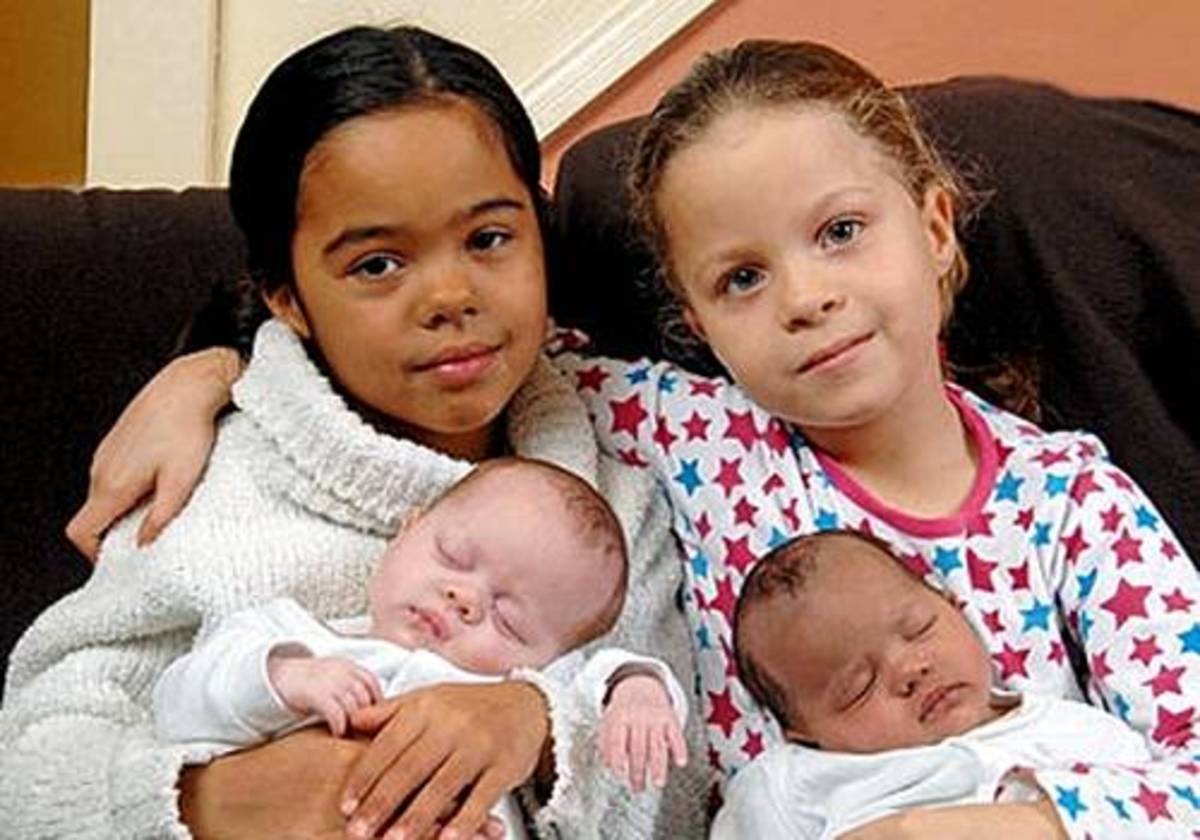 |
| Non-Identical twins |
________________________________________________
______________________________________
JUST FOR THOSE WHO ALWAYS WANT TO LEARN MORE... HAVE FUN!
Why do we look like our parents? An introduction to Genetics and DNA

Why do you look like your parents?
What is DNA?
How Gregor Mendel's pea plants helped us understand genetics:
 |
| Gregor Mendel |
What is genetics?
Genetics is the study of genes and heredity. It studies how living organisms, including people, inherit traits from their parents. Genetics is generally considered part of the science of biology. Scientists who study genetics are called geneticists.
Genetics is the study of genes and heredity. It studies how living organisms, including people, inherit traits from their parents. Genetics is generally considered part of the science of biology. Scientists who study genetics are called geneticists.
Gregor Mendel is
considered the father of the science of genetics. Mendel was a scientist during
the 1800s who studied inheritance by experimenting with pea plants in his
garden. Through his experiments he was able to show patterns of inheritance and
prove that traits were inherited from the parents.

What are genes?
Genes are the basic units of heredity. They consist of DNA and are part of a larger structure called the chromosome. Genes carry information that determine what characteristics are inherited from an organism's parents. They determine traits such as the color of your hair, how tall you are, and the color of your eyes.
What are chromosomes?
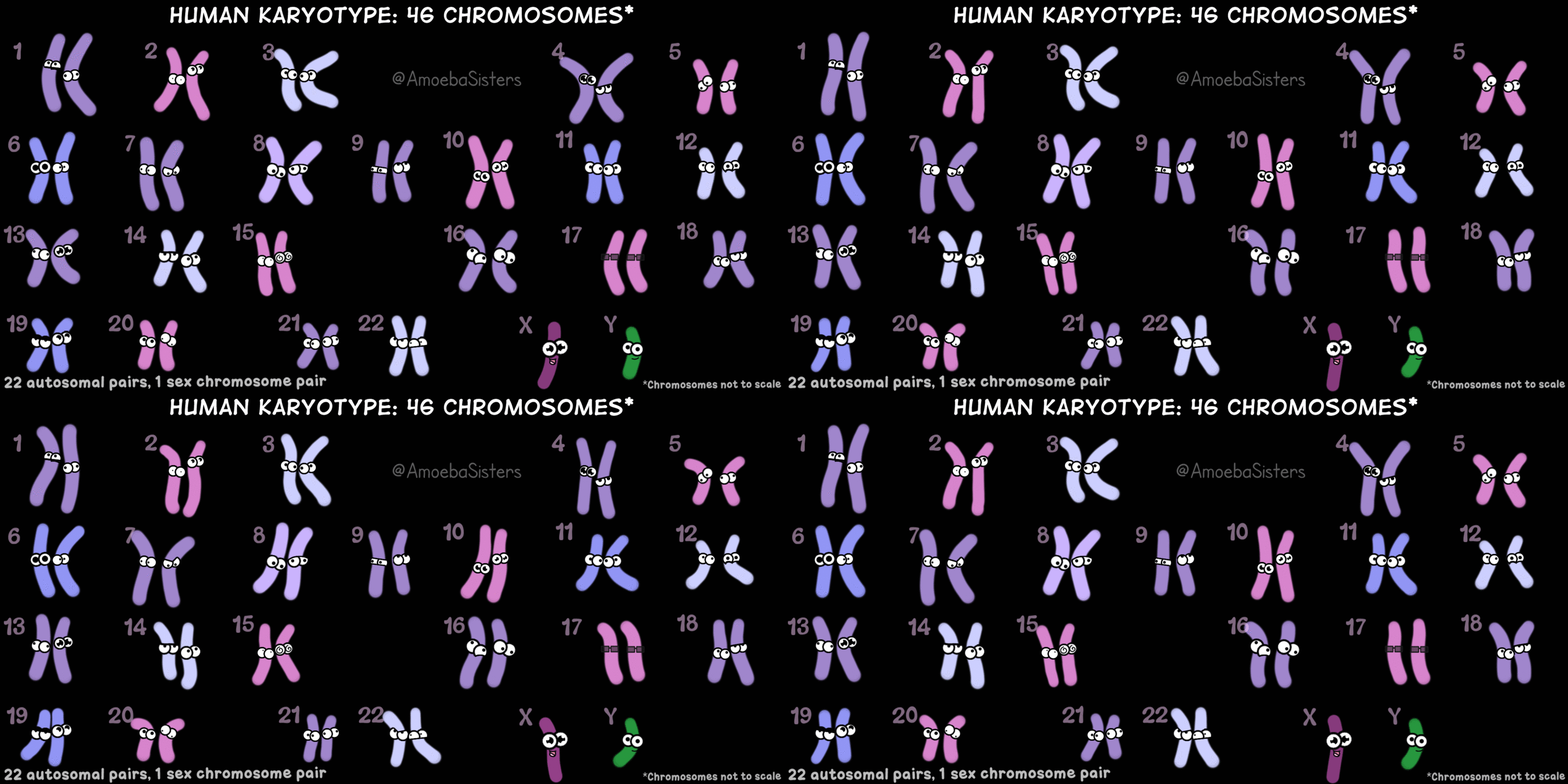
Chromosomes are tiny structures inside cells made from DNA and protein. The information inside chromosomes acts like a recipe that tells cells how to function. Humans have 23 pairs of chromosomes for a total of 46 chromosomes in each cell. Other plants and animals have different numbers of chromosomes. For example, a garden pea has 14 chromosomes and an elephant has 56.
What is DNA?
The actual instructions inside the chromosome is stored in a long molecule called DNA. DNA stands for deoxyribonucleic acid.
Interesting Facts about Genetics
- Two humans
typically share around 99.9% of the same genetic material. It's only the
0.1% of the material that makes them different.
- Humans share
about 90% of genetic material with mice and 98% with chimpanzees.
- DNA molecules
have a specific shape called "double
helix": the DNA molecule is shaped like a twisted ladder.
James Watson and Francis Crick
solved the structure of DNA. Other scientists, like Rosalind
Franklin and Maurice Wilkins, also contributed to
this discovery.
- Nearly every
cell in the human body contains a complete copy of the human genome in its nucleus. For
example, mature red blood cells do not contain nuclear
DNA.
- In humans, each
cell normally contains 46 chromosomes arranged in pairs. We get 23 chromosomes from our
mother and 23 from our father.
- Some diseases
are inherited through genes.
- Some inherited
traits are determined by multiple different genes.
- Doctors may be
able to cure diseases in the future by replacing bad DNA with good DNA
using a process called gene therapy.
(adapted from: